Last updated: March 2026. Weather and holiday dates can shift slightly each year; confirm closer to your trip.
For many first-time visitors, a Chengdu trip boils down to three things: see the giant pandas, eat hotpot, and slow down in People’s Park or Kuanzhai Alley. Spring lines all three up without the downsides—the panda base is neither stuffy nor baking, the park’s trees are in new leaf, and you’re not yet queueing on the pavement outside hotpot joints. If you avoid Qingming and Labor Day and focus on late March through April and early May, you’ll see why locals say spring is when Chengdu rewards an extra night or two.
In a Nutshell
Less ideal for: Anyone who hates humidity, has serious pollen or poplar-fluff allergies, or is only after mountains and highlands (that’s western Sichuan).
Sweet spot: Late March–mid to late April (avoid Qingming), plus weekdays in early May.
Why Chengdu in Spring Works
Panda Base: A Morning That Doesn’t Wipe You Out
The Chengdu Research Base of Giant Panda Breeding is close to town but big enough that a proper visit means several hours on your feet. In summer it gets muggy; in winter the early slot can feel sharp. Spring hits the middle: morning temps in the teens (°C), new leaves giving shade without trapping heat, and a breeze that feels cool, not cold.
Pandas are generally more active in the morning—cubs tumbling, adults eating bamboo or napping in the groves. Spring light is soft, so you’re less likely to end up with blown-out white blobs in photos. Get in early, pick a route that’s not the main crush, and you can spend the morning there without feeling wrecked.
- Aim for 8:00–11:30 for the most comfortable stretch.
- You can walk for 3–4 hours without overheating.
- Pair with an afternoon in town—teahouse or Kuanzhai Alley—rather than staying out in the suburbs.
People’s Park and Teahouses: Spring as “Slow Life 101”
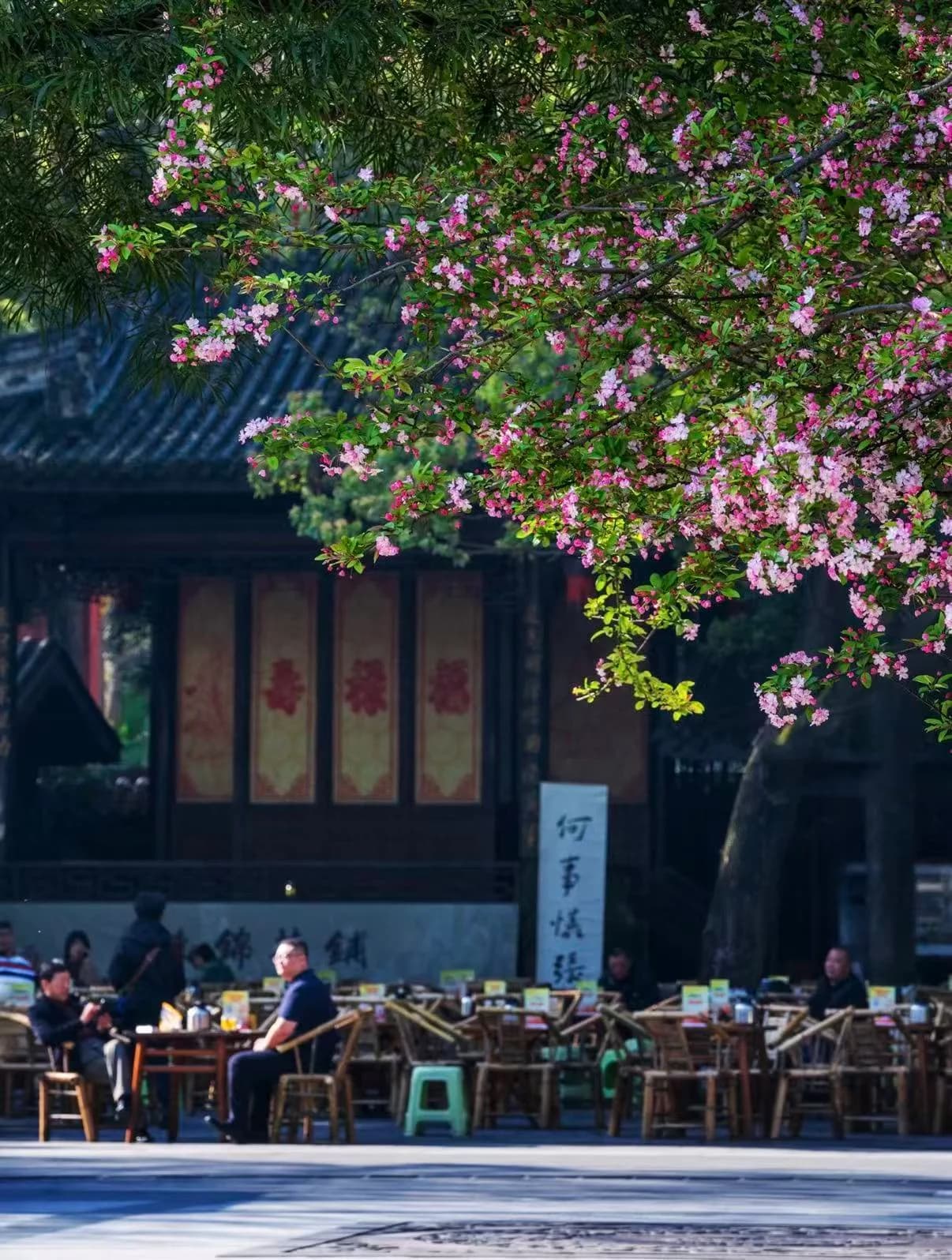
People’s Park is busy with tea, ear-cleaning, and card games year-round. In spring the rhythm is easier to read: trees in new leaf, the lake not yet baked by summer sun, chairs full but not fight-for-a-seat full. Order a gaiwan of tea and you can sit from mid-morning into the afternoon, watching older locals play cards and kids run around, with the occasional ear-cleaner passing by.
If you’re new to Chinese city parks, spring here works like an intro class: you don’t have to “do” much. Sit, watch, and the weather is comfortable enough to stay outside instead of retreating to air-con like in summer.
- 10:00–17:00 works any day; afternoon is a bit warmer.
- Cost is basically the price of one tea; you can sit for hours.
- Light and greenery are gentle—good for photos without harsh contrast.
Flowers and Qingyang Palace: A Spring-Only Route
Spring is when Chengdu’s central parks and temple grounds look their best—new green and seasonal flowers. Qingyang Palace (青羊宫) is a well-known Taoist temple in the old city. In spring the courtyards and paths get new foliage and blossoms, and the temple sits in the same neighborhood as Kuanzhai Alley and People’s Park, so you can string together a half-day “flowers + old architecture” walk: start at Qingyang Palace, then follow Qintai Road or nearby streets toward Kuanzhai Alley and the park.
What makes this route special is that it’s a spring combo—mild, not hot or grey. If you want a bit of Taoist culture, old streets, and spring blooms in one go, it’s worth blocking out a morning or afternoon.
- Route: Qingyang Palace → Qintai Road or side streets → Kuanzhai Alley / People’s Park (one or both).
- Allow 2–3 hours depending on pace.
- Same walk in summer or winter feels completely different.
City Strolls: Kuanzhai Alley, Jinli, and Streets That Invite Walking
Kuanzhai Alley and Jinli are busy in every season, but spring makes walking them easier—warm enough to linger, not so hot that you’re hunting for shade or so cold that you don’t want to stop for a photo. Trees in new leaf and early flowers make the old buildings and signs look made for a slow walk rather than a quick tick-off.
- Walking zones: Qingyang Palace + Kuanzhai Alley + streets around People’s Park / Wuhou Shrine + Jinli.
- Pace: walk (including flowers and Qingyang) by day; save evening for hotpot or Sichuan opera.
- Photos: street corners, signs, teahouse entrances, temple courtyards and blossoms—more “daily slice” than single landmark.
Hotpot in Spring: Step Outside Without a Shock
Hotpot isn’t seasonal, but spring changes the after-effect. In summer you leave the restaurant sweating; in winter the cold hits as soon as you’re out the door. In spring the air is mild enough to walk a bit, let the meal settle, and still feel fine.
If you’re not a heavy spice person, spring is a good time for a first proper Sichuan hotpot—your body isn’t already dealing with heat or cold, so you can focus on which broth and dip you like. Finish with a cold drink from a street stall or a short walk back; the experience holds together.
Spring Weather and Holidays: What to Plan For
Temperature and Feel
- Late March: Daytime around 12–18°C; cooler in the morning and evening—bring a layer.
- April: Often 15–22°C; one of the most comfortable stretches of the year for being outside.
- Early May: Creeps toward 20–26°C; afternoons can feel like early summer.
Overall, spring in Chengdu is neither bone-dry nor muggy—well suited to walking, tea, and sightseeing.
Rain and Humidity
Spring in Chengdu brings rain, but usually showers or overcast with light drizzle, not all-day downpours. When it does rain, the air gets damper and a bit cooler, but rarely uncomfortably so. A waterproof or windproof layer and a folding umbrella cover most cases.
Qingming and Labor Day: Windows to Avoid
- Qingming Festival (around April 4–6): Tomb-sweeping plus short-break travel—roads, trains, and nearby sights get busier.
- Labor Day (May 1–5): One of China’s biggest travel peaks; as a hub for the southwest, Chengdu sees higher prices and crowds.
A 3-Day Spring Plan for Chengdu
Day 1: Panda Base + Downtown
- Morning: Head to the panda base for an early slot. Hit the cub and most active areas first, then fill in the rest. In spring, 3–4 hours on site is manageable.
- Lunch: Quick noodles or snacks near a metro stop or in town.
- Afternoon: Chunxi Road or Taikoo Li—low-key browsing and a coffee to ease into the city.
- Evening: A well-reviewed hotpot place near where you’re staying; try yuanyang (split pot) or mild spice so the first meal isn’t a endurance test.
Day 2: Flowers + Qingyang Palace + Kuanzhai Alley + Teahouse
- Morning: Start at Qingyang Palace—courtyards and paths with spring greenery and flowers—then walk along Qintai Road or side streets toward Kuanzhai Alley.
- Lunch: A local spot near Kuanzhai or People’s Park (dandan noodles, Zhong dumplings, or simple Sichuan dishes).
- Afternoon: People’s Park, pick a teahouse, order a gaiwan, and watch the crowd. Spring shade is comfortable; no need to retreat indoors.
- Evening: Either more time at the teahouse or a Sichuan opera face-changing show.
Day 3: Leshan / Dujiangyan Day Trip, or More City
- Option A—Leshan Giant Buddha or Dujiangyan: Spring temps are fine for a full day out; take the high-speed train and local transport for a one-day round trip.
- Option B—City catch-up: Du Fu Thatched Cottage, Wuhou Shrine and Jinli, or anywhere you skipped—take it slow.
What to Pack for Spring
- Clothing: T-shirt or light long sleeves + a layer you can take off (windbreaker, soft shell, or light jacket). Jeans or casual trousers are enough; no need for heavy thermals.
- Shoes: Comfortable for a full day on park paths, cobblestones, and temple grounds.
- Extras: Folding umbrella or light rain jacket; mask if you’re sensitive to pollen or poplar fluff; a thin scarf for early/late or overcast days.
Is Spring Chengdu Right for You?
- First China trip, already doing Beijing or Shanghai: Adding Chengdu in spring is an easy win—pandas, hotpot, teahouses, and slow life without fighting extreme weather.
- You care more about “city life” than big sights: Spring puts local life in comfortable light and temperature—parks, teahouses, street food, and hotpot conversations stick better.
- Budget and crowds: Skipping Qingming and Labor Day and using late March, mid-April, or early-May weekdays helps on flights, hotels, and how the city feels.
Once you’ve checked the holiday calendar and forecast and decided when to do the panda base, city walks, and hotpot, spring Chengdu tends to open up on its own—less a city to “conquer” than one that invites you to sit down and stay a while.
We update this guide annually.