Last updated: March 2026. Prices and hours subject to change—verify before visiting.
Shanghai never resolved the tension between glamour and grit—and stopped trying. Art Deco skyscrapers and laundry-strung longtang alleys exist within the same block, and both feel completely at home. This is Shanghai—not burdened by six centuries of imperial weight like Beijing, nor built on a blank canvas like Shenzhen. It was Asia's most international city in the 1920s, known as the "Paris of the East," then reinvented itself in the 1990s. Now, it's China's largest city, its most modern and prosperous—some call it the "Manhattan of the East."
At a Glance
| Best time to visit | March–May, September–November |
| Recommended stay | 3–4 days |
| Budget per day | ¥400–800 (mid-range) |
| Getting there | Pudong Airport (international), Hongqiao Airport (domestic), Hongqiao Railway Station (high-speed rail) |
| Known for | Art Deco architecture, French Concession, local cuisine (benbang), The Bund at night |
| Special requirements | None |
Why Shanghai Belongs on Your China Itinerary
Shanghai isn't "traditional China"—that's exactly its value. If you want to see the Great Wall and Forbidden City, go to Beijing. But if you want to understand how modern China coexists with globalization, come to Shanghai. There's a unique urban temperament here: morning coffee under plane trees in the French Concession, midday meetings between skyscrapers in Lujiazui, evening watching century-old buildings face off against a neon skyline on the Bund. This juxtaposition—only Shanghai can provide it.
Ways to Experience Shanghai
The Bund & Beyond
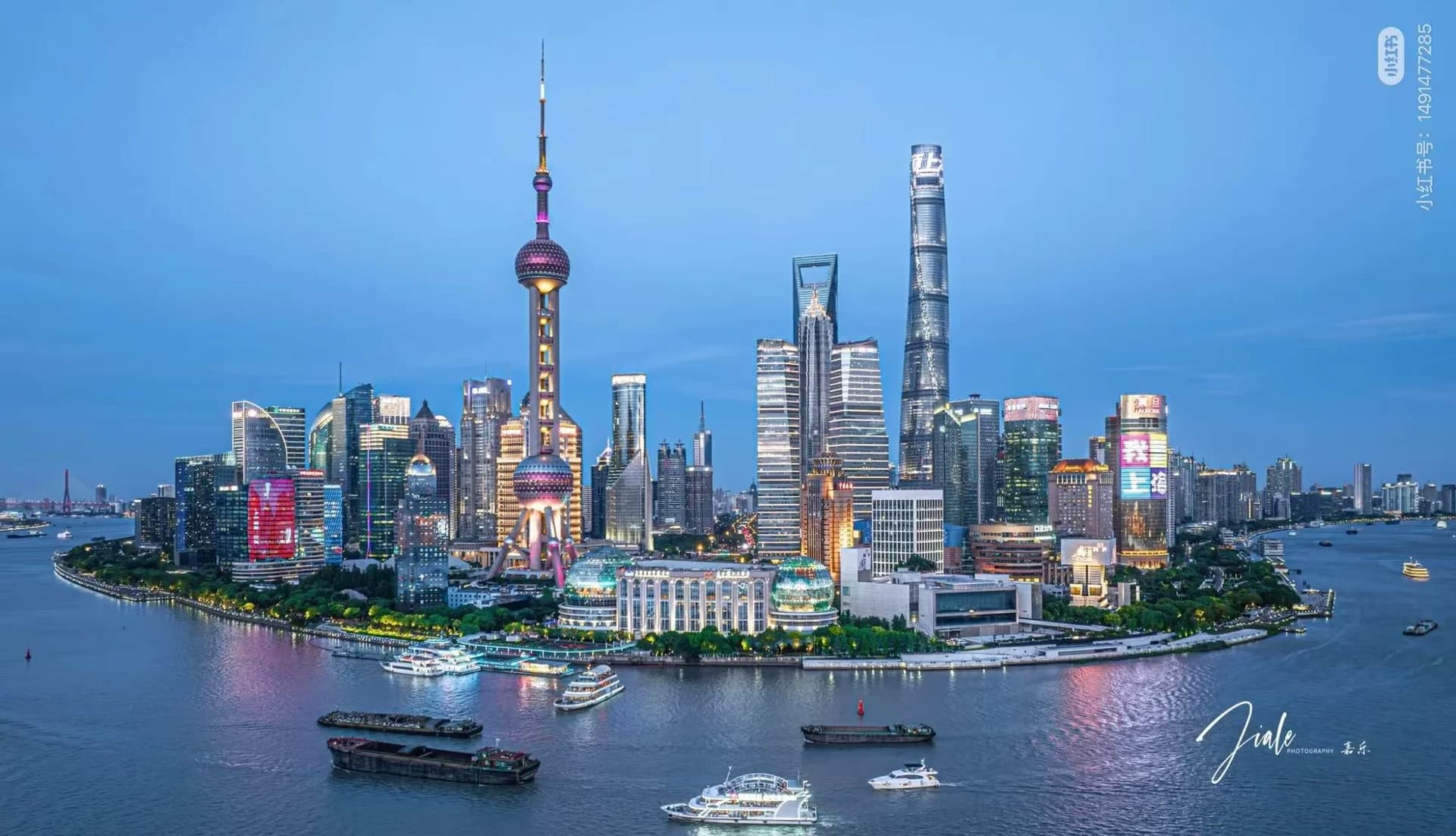
The Bund isn't just a photo checkpoint. 19th-century bank buildings and 21st-century skyscrapers face each other across the river—Shanghai's core visual metaphor. Best times: Sunrise (fewer crowds) or night (lighting). Don't just stand on the viewing platform—walk into those historic buildings, now mostly hotels and restaurants where you can freely enter the lobbies.
French Concession Walk
The French Concession isn't an attraction, it's an atmosphere. Plane trees, old villas, independent cafés, hidden longtang alleys. Best route: Start on Wukang Road, pass Ba Jin's former residence, walk to Anfu Road, then turn into any interesting-looking alley. Getting lost is part of the experience.
Shanghai Food Tour
Shanghai cuisine skews sweet—this is the first thing visitors need to adjust to. Dark, rich sauces, heavy caramelization, but the sweetness isn't for its own sake—it's to enhance umami. Start with street shengjian (Yang's Fry Dumpling), move to xiaolongbao (Jia Jia Tang Bao), then benbang hongshaorou (Lao Ji Shi). Finish with scallion oil noodles—this is Shanghai's soul food.
Top Attractions in Shanghai
The Bund & Lujiazui
Yu Garden & Old Town
Disneyland Shanghai
What to Eat in Shanghai
Shanghai cuisine's core is "nong you chi jiang"—dark, rich, sweet.
Hongshaorou (Red-Braised Pork)
Xiaolongbao (Soup Dumplings)
Shengjian (Pan-Fried Pork Buns)
Scallion Oil Noodles
Pork Chop with Rice Cakes
Fried pork chop with rice cakes, Xian De Lai (Yunnan Road) is the old-school spot.
Where to Stay in Shanghai
[Historic Center] The Bund/Nanjing Road
[Bohemian Living] French Concession
[Modern Business] Jing'an Temple
Getting to and Around Shanghai
Getting to Shanghai
- Pudong Airport (PVG): Main international hub, Metro Line 2/Maglev to downtown (45–60 minutes)
- Hongqiao Airport (SHA): Mainly domestic flights, Metro Line 10 to downtown (30 minutes) By Train:
- Hongqiao Railway Station: Main high-speed rail hub, connected to Hongqiao Airport, Metro Lines 2/10/17, 30 minutes to downtown
- Shanghai Railway Station: Some high-speed trains, city center, Metro Lines 1/3/4 Important: Confirm which station your train ticket is for—Hongqiao and Shanghai stations are about 15 kilometers apart. Going to the wrong one is a costly mistake.
Getting Around Shanghai
Before You Go
- Shanghai cuisine is sweet: Red-braised dishes are heavily caramelized. First-time visitors may need to adjust. If you don't like sweet, order steamed or blanched dishes.
- French Concession is best for walking: But old alleys are easy to get lost in—download offline maps.
- The Bund at night is essential: But extremely crowded during holidays—weekday evenings are better.
- Disneyland requires advance booking: Weekdays offer better experience, avoid weekends and holidays.
- Plum rain season (June): Humid and uncomfortable, not recommended for visits.
- Typhoon season (July–September): Monitor weather forecasts, may affect flights.
- Confirm your railway station: Hongqiao and Shanghai are different stations—double-check to avoid going to the wrong one.
Shanghai isn't a city you "see"—it's a city you "feel." Feel the visual tension between Art Deco buildings and communist-era housing, the temporal fold between French Concession cafés and Lujiazui finance towers, the sweetness and umami of local cuisine. This city won't give you postcard-perfect impressions of China. It gives you the complexity of modern China—and that's exactly why it's worth visiting.
- Shanghai Street Food — Deep dive into local cuisine
- Shanghai in Spring — Seasonal guide
- The Bund & Lujiazui — Detailed attraction guide
- Shanghai Disneyland
- French Concession Walking
- Yu Garden & Old Town