Last updated: March 2026. Verify before booking.
[Opening Paragraph]
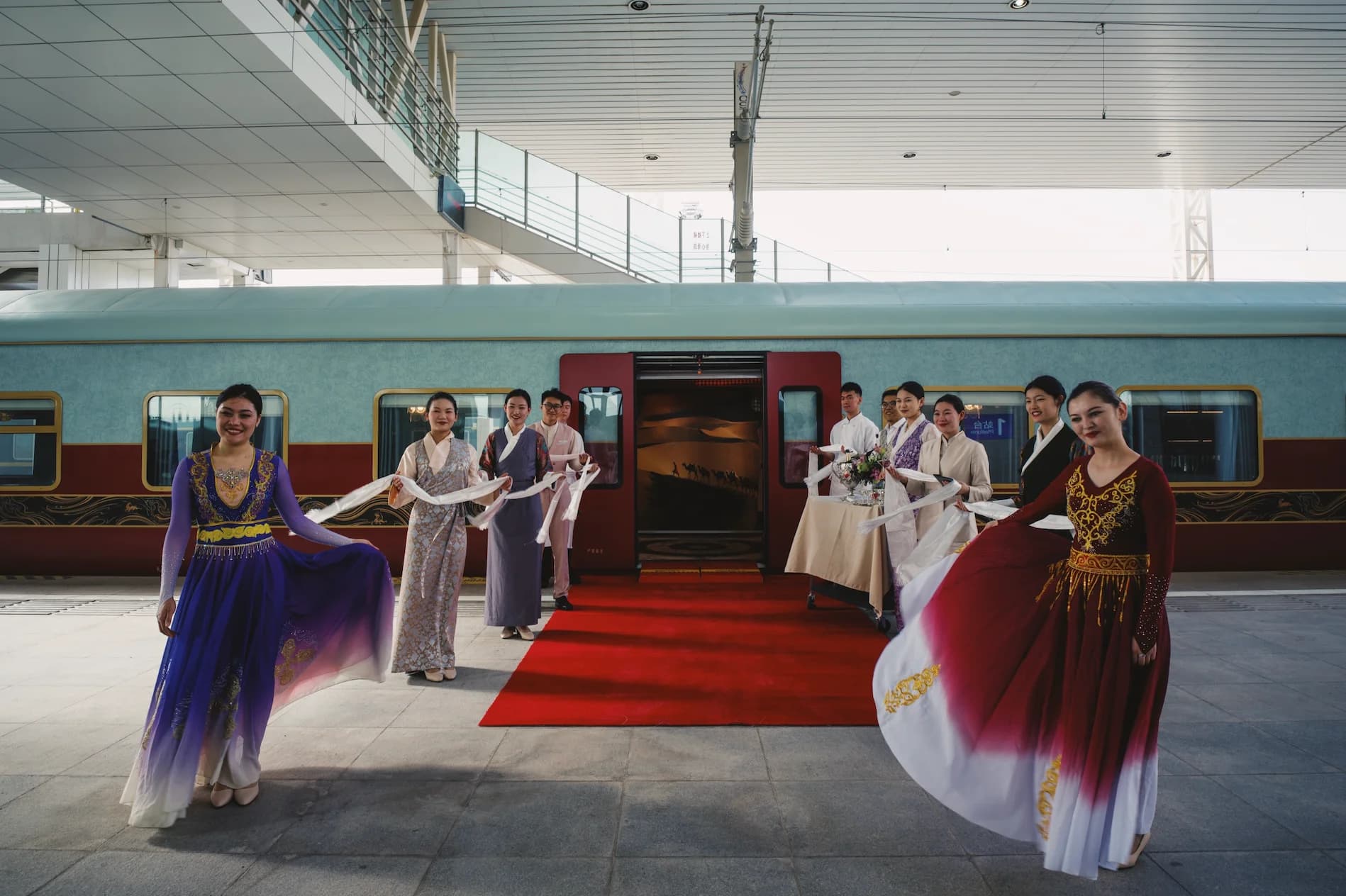
Many people imagine Northwest China as "fly in + private car sprint + one major sight per day." That works, but it can drain you before the trip is halfway done. Train journeys offer another logic: transit becomes accommodation, and time on the road becomes part of the vacation. Products like the "Silk Road Dream" usually link Dunhuang, areas around Qinghai Lake, and Xining in 4-5 days, with comfortable onboard stays, arranged meals, and guided ground excursions. In essence, it is a premium group tour-but because you live on the train, the rhythm feels closer to a moving resort. This guide focuses on the three questions international travelers ask most: Is it worth it? Is it too rushed? What should I prepare in advance?
[Core Content Sections]
Is This Right For You
- ✅ Great for: Travelers with flexible budgets who prioritize convenience; people who do not want to switch hotels every day; anyone who wants to save daytime energy for landscape views.
- ✅ Good fit for: Travelers interested in Mogao Caves, salt lakes, and Qinghai Lake but who do not want to assemble logistics themselves.
- ❌ Not ideal for: Travelers who want full freedom in food, pace, and daily changes; tourist trains are fundamentally pre-arranged.
- ❌ Also not ideal for: Budget-sensitive travelers; doing the same route via regular transport plus self-booked hotels is often cheaper.
Route Overview
How to time intercity trains: prioritize morning or around-noon departures so you still get a useful half-day after arrival.
| Day | City/Area | Daily Theme | Transport |
|---|---|---|---|
| Day 1 | Dunhuang | Gathering and boarding: start with maximum atmosphere | Train check-in |
| Day 2 | Dunhuang | Mogao Caves + Mingsha Mountain (depends on product) | Ground excursion |
| Day 3 | Toward Qaidam/Golmud | Salt lake / Emerald Lake and wilderness landscapes | Ground excursion |
| Day 4 | Around Qinghai Lake | Lake and grassland: save vast views for daytime | Train + ground |
| Day 5 | Xining | Monastery/city finale + tour ends | Ground excursion |
Why do people choose this format?
The regular approach is point-to-point rushing, giving your best energy to transit. Train journeys absorb that transit burden and support your stamina with onboard stays and meals, so daily land visits feel more like "go out, then return home."
The regular approach is point-to-point rushing, giving your best energy to transit. Train journeys absorb that transit burden and support your stamina with onboard stays and meals, so daily land visits feel more like "go out, then return home."
Day 1: Dunhuang - Treat boarding as part of the trip
Morning / Noon
- Settle in after arriving in Dunhuang; do not overpack day one.
Afternoon
- After checking into your cabin, learn the train layout: dining car, common lounge, viewing carriage, etc. (depends on product).
Evening
- Shift your body into slow-travel mode; early sleep matters more than nightlife.
Day 2: Dunhuang - A low-stress Mogao + Mingsha day
Morning
- For resources like Mogao Caves, queue risk and sold-out slots are major issues. Product value often lies in well-organized entry.
Afternoon
- Mingsha-style activities are demanding in heat and light; if temperatures are high, late afternoon is usually better.
Evening
- Return to the train: that is the core benefit-no need to search for transport, routes, or dinner again.
Day 3: Salt Lake/Wilderness Day - Great photos, but manage sun exposure
Morning
- Salt-lake and Emerald-lake areas are often windy and bright. Hat, sunscreen, and hydration are essentials.
Afternoon
- Separate "photo time" from "walking time": do concentrated photo stops, then leave space for rest.
Evening
- Recover onboard so you can keep enjoying scenery the next day.
Day 4: Qinghai Lake - Save the vastness for daytime windows
Morning / Afternoon
- If your train passes the Qinghai Lake corridor by day, prioritize viewing carriage/window time. This is one of the hardest parts to replicate in other travel styles.
Evening
- Sleep early; final-day wrap-up in Xining often starts early.
Day 5: Xining - Monastery/city finale and dispersal
Morning
- If monastery/cultural stops are included, treat them as a gentle slowdown. Northwest travel does not need constant intensity.
Afternoon
- Tour ends and departure.
High-Speed Rail Connections (By Day)
- Boarding day (Dunhuang): ideally arrive in Dunhuang the day before to avoid flight-delay risk.
- During itinerary: treat onboard stretches as rest + viewing time. Recovering on the train after excursions is the main advantage.
- Dispersal day (Xining): book return flight/train in late afternoon or evening for buffer.
- Practical rule: this product works best with less self-added complexity; too many custom side plans cancel the convenience value.
Getting There and Getting Around
- Long-distance access: you still need to plan entry into Dunhuang and exit from Xining by air/rail in advance.
- Payment and internet: both onboard and on-ground spending depend on connectivity and mobile payment; prepare with:
Practical Information
| Item | Recommendation |
|---|---|
| Recommended length | 4-5 days (product-based) |
| Difficulty | Low (ground organization handled by operator) |
| Budget | High (core cost is all-inclusive package pricing) |
| Best for | Convenience-first travelers with budget flexibility who want to save energy for scenery |
Book These in Advance
- Train product/cabin type: limited inventory, especially tight in peak season.
- Dunhuang/Xining access transport: lock in your in/out transport first, then confirm the train product.
Tips and Tricks
- Treat it as a premium group tour: expecting full freedom causes disappointment; expecting comfort and low hassle works better.
- Pack for sun and cold together: strong daytime sun and cool nights are normal in the Northwest.
- Do not overfill each day: the value of train travel is in slower rhythm, not more check-ins.
What to Cut If You're Short on Time
- Not enough days: skip the tourist train; regular transport for "Dunhuang + Xining/Qinghai Lake" is more time-efficient.
Before You Go Checklist
- □ Mobile payment setup - How to Pay in China
- □ Connectivity plan - Staying Connected in China
- □ Sun kit (hat/sunglasses/sunscreen) + warm layer (light down/fleece)
FAQ
Q1: Why not just take a normal train from Dunhuang to Xining?
Regular trains are more efficient. Tourist train value is turning transit into experience plus all-inclusive convenience.
Regular trains are more efficient. Tourist train value is turning transit into experience plus all-inclusive convenience.
Q2: Is it good for families with kids?
If kids can follow a fixed pace and benefit from comfortable accommodation/meals, it can work very well. If they need large free-play flexibility, it may be less suitable.
If kids can follow a fixed pace and benefit from comfortable accommodation/meals, it can work very well. If they need large free-play flexibility, it may be less suitable.
[Closing Paragraph]
Luxury train products like the Silk Road Dream are basically trading budget for ease: transit is absorbed into lodging, so your energy stays for Mogao Caves, salt lakes, and Qinghai Lake's vast landscapes. If your goal is "less planning stress, better comfort, and broad sightseeing without burnout," this model makes sense. If your top priority is maximum freedom, regular transport is better.
Related Internal Links(3-5)