Last updated: March 2026. Verify before booking.
Evening light hits the charcoal braziers on Huimin Street, and the air carries cumin and chili powder. A man in a white skullcap flips lamb skewers; fat drips onto the coals with a hiss. Next to him, a vendor calls out in Shaanxi dialect: "Try one. If it's not good, you don't pay." This isn't a theme park designed for tourists — it's a real neighborhood that's been here for 1,300 years, and it happens to have excellent food.
What This Actually Is
The Muslim Quarter is a dining district in Xi'an's Hui Muslim community, located north of the Drum Tower. It consists of several intersecting alleys — Beiyuanmen, Dapiyuan, Sajinqiao — where residents, descendants of Arab and Persian Silk Road traders from the Tang Dynasty, maintain halal dietary practices. For visitors, it's a place to walk and eat, where under ¥100 can fill you to bursting. For locals, it's their daily canteen, their butcher shop for fresh lamb, their breakfast spot, their wedding banquet venue.
Is It Worth It
- People who love street food and don't mind eating standing up or walking
- Travelers who want to experience real local life rather than polished tourist attractions
- Anyone curious about Islamic culture and how China's Muslim communities live day-to-day
- You have high hygiene standards and can't handle open-air cooking environments
- You dislike crowds and noise — the main street gets packed on weekends
- You're looking for a sit-down restaurant experience with table service and comfortable seating
The Real Experience
Most visitors never leave Beiyuanmen, the main drag running from the Drum Tower to the north gate. It's convenient, brightly lit, and photogenic. It's also overpriced, inconsistent in quality, and vendors often quote tourists higher prices than locals.
The real Muslim Quarter is in the side alleys — Dapiyuan, Sajinqiao, Miaohoujie. No neon signs here, weathered storefronts, but the food is often more authentic and fairly priced. Lamb skewers that cost ¥10 for three on the main street? ¥10 for five in the alleys, and the meat chunks are bigger.
5 PM: Vendors light their fires. Lamb comes out of cold storage. The first skewers hit the grill. Fewest tourists, best time to browse and choose.
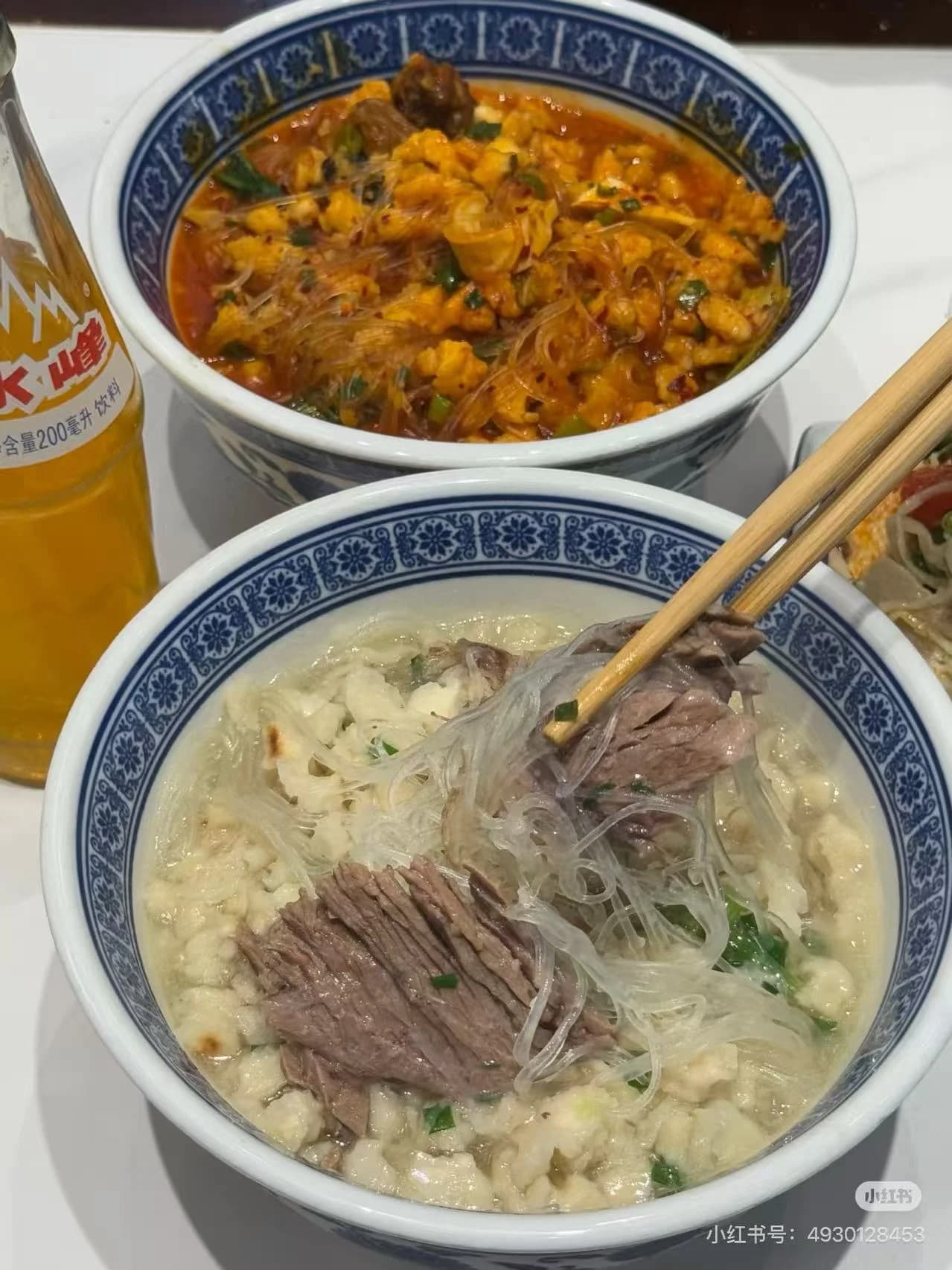
7 PM: Local office workers arrive for dinner. Small shops fill up. This is the best window to observe real life — how the grill master greets regulars, how a family shares one bowl of yangroupaomo.
9 PM: Peak tourist hour. The main street is impassable. Retreat to the alleys or call it a night.
1 AM: Some old shops are still serving, mainly barbecue and paomo spots doing late-night business. If you're a night owl, this is your "Xi'an midnight canteen."
How to Do It
Common Mistakes
Before You Go Checklist
□ Go hungry — you'll want to try as many things as possible
□ Wear comfortable shoes — you'll be standing and walking for 2–3 hours
□ Bring some cash as backup — while mobile payment is universal, a few old shops may be cash-only
□ Check the weather — some open-air stalls may not operate in heavy rain
□ Understand basic halal dietary restrictions — respect the local culture; don't discuss pork or alcohol near the stalls
This connection needs no explanation — the food is the proof.