Last updated: March 2026. Verify before booking.
Xi'an served as China's capital under thirteen dynasties — more than any other city in Chinese history. The Silk Road began at its western gates, and the first emperor of unified China was buried here with an army of terracotta soldiers that remained hidden for over two millennia. Today you can cycle atop a Ming-dynasty wall in the morning, stand before those clay soldiers by noon, and eat lamb skewers from recipes older than most European countries by evening.
At a Glance
| |
|---|
| Best time to visit | March–May, September–November |
| Recommended stay | 3 days |
| Budget per day | ¥400–600 ($55–85 USD) |
| Getting there | Xi'an Xianyang International Airport (XIY); high-speed rail from Beijing (4–5 hrs), Shanghai (6–7 hrs), Chengdu (3–4 hrs) |
| Known for | Terracotta Warriors, ancient city walls, Silk Road food culture |
| Special requirements | Terracotta Warriors and Shaanxi History Museum require advance online booking |
Why Xi'an Belongs on Your China Itinerary
Most visitors to China feel they must choose: Beijing for imperial history, Shanghai for modern energy. Xi'an renders that choice unnecessary. This is where ancient China isn't reconstructed or staged — it's the ground beneath your feet, the food on your plate, the wall you cycle across. The Muslim Quarter's lamb skewers come from recipes brought by Silk Road traders 1,300 years ago. The city wall is a working part of the city — cyclists and walkers use it daily. And the Terracotta Army isn't just a photo stop — standing before thousands of unique clay faces, you understand why this was the center of the ancient world's most powerful empire. Geographically, Xi'an sits at the heart of China's high-speed rail network, making it a logical waypoint between east and west rather than a detour.
Ways to Experience Xi'an
Terracotta Warriors Discovery
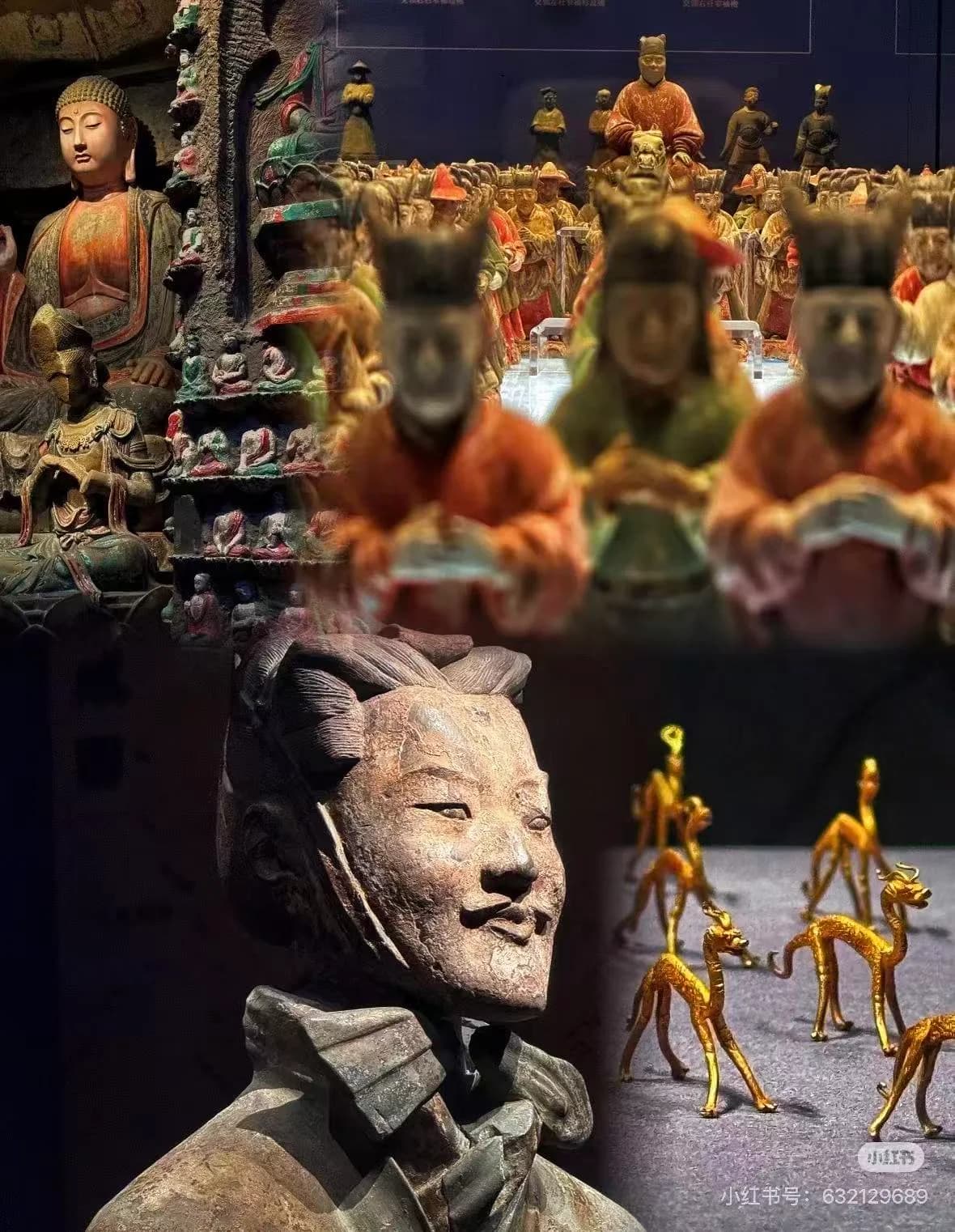
Walk through three excavated pits estimated to contain over 8,000 figures in total; more than 2,000 have been restored and are on display. Life-sized soldiers, horses, and chariots — each with unique facial features forged 2,200 years ago. The bronze chariots in the accompanying museum reveal engineering sophistication that wouldn't be matched for centuries. This isn't a sculpture garden; it's a buried empire. Plan a half-day, book tickets in advance, and budget extra for a guide — without context, you're looking at clay. With context, you're standing before the army that unified China.
[INTERNAL LINK: TODO]
Cycling the Ancient City Wall
Ride atop the most intact city wall in China — 13.7 kilometers of Ming-dynasty fortifications that completely encircle the old city. The surface is wide enough for four cars abreast, and the views shift from traditional courtyard neighborhoods to modern towers as you pedal. Start at South Gate (Yongningmen) an hour before sunset, when the gate tower lights up and the heat subsides. The full circuit takes 1–2 hours by bike; walking requires 3–4 hours and serious commitment.
[INTERNAL LINK: TODO]
Tang Dynasty Immersion
Experience China's golden age through the sites that survived it. Walk the grounds of the Giant Wild Goose Pagoda, where the monk Xuanzang translated Sanskrit scriptures into Chinese after his journey to India. Explore the Tang Paradise gardens, where reconstructed pavilions host evening light shows. Wander the Twelve Hours of Chang'an themed district, a commercial reconstruction that nonetheless captures the energy of a city that once housed a million people — the largest in the world. Stay for the musical fountain show at the pagoda plaza; it starts after dark.
[INTERNAL LINK: TODO]
Top Attractions in Xi'an
Terracotta Warriors (兵马俑)
The buried army of Qin Shi Huang, China's first emperor, lay undisturbed from 210 BC until farmers discovered them in 1974. The three excavation pits are estimated to contain over 8,000 figures in total; more than 2,000 have been restored and are on display — soldiers, archers, cavalry, and chariots arranged in battle formation. Located 40 kilometers east of downtown; take Metro Line 9 to Huaqingchi Station, then transfer to the Lintong bus. Budget a half-day and arrive early — the site draws crowds regardless of season.
[INTERNAL LINK: /destinations/xian/terracotta-warriors TODO]
Xi'an City Wall (西安城墙)
Ming-dynasty fortifications built atop Tang-dynasty foundations, standing 12 meters high and 12–14 meters wide at the top. Eighteen gates pierce the wall; South Gate (Yongningmen) is the most impressive, with a double gate system and evening illumination. The surface is paved with bricks that can be uneven — wear shoes with grip, especially after rain. Bike rental available at multiple gates; the full circuit is 13.7 kilometers.
[INTERNAL LINK: /destinations/xian/xian-city-wall TODO]
Big Wild Goose Pagoda (大雁塔)
A seven-story square pagoda built in 652 AD to house Buddhist scriptures brought from India. Standing 64 meters tall, the surrounding temple complex includes gardens and museums, but the draw is the evening — after sunset, the north plaza hosts China's largest musical fountain show, with water jets choreographed to music against the illuminated pagoda. The metro stops right at the plaza; arrive thirty minutes early for a decent viewing spot.
[INTERNAL LINK: /destinations/xian/big-wild-goose-pagoda TODO]
What to Eat in Xi'an
Yangroupaomo (羊肉泡馍) — Lamb soup with hand-torn flatbread, a filling Northwest specialty. You'll receive a bowl of broth and a flatbread; tear the bread into small pieces while waiting — smaller pieces absorb the rich broth better. The ritual takes twenty minutes and is as much about the process as the eating.
Biangbiang Mian (Biángbiáng面) — Wide hand-pulled noodles named for the sound of dough slapping the counter. Each noodle is as wide as a belt and chewy enough to require real effort. Available with various toppings; the oil-splashed version (油泼面) is the local standard.
Roujiamo (肉夹馍) — "Chinese hamburger" with slow-braised pork or cumin-spiced beef stuffed into crispy flatbread. The Muslim Quarter version uses halal beef and heavier cumin; look for stalls with lines of locals rather than tour groups.
Youpo Mian (油泼面) — Boiled noodles topped with chili flakes and scallions, then drenched in sizzling hot oil that releases the aromatics. Simple, cheap, and everywhere.
Hulu Ji (葫芦鸡) — Whole chicken steamed until tender, then deep-fried until the skin crisps. A traditional Shaanxi dish named for the gourd-like shape the bird takes when arranged on the plate.
Where to Stay in Xi'an
[First-timers] Near Bell Tower — Central location within walking distance of the Muslim Quarter, Drum Tower, and Beilin Museum. Metro Lines 1 and 2 intersect here; 40.4% of visitors choose this area.
[Culture/Nightlife] Datang Everbright City — Close to Shaanxi History Museum, Tang Paradise, and the Twelve Hours of Chang'an district. Heavy concentration of evening shows and lights; 25.4% of visitors prefer this area.
[Proximity to Warriors] Lintong District — Near the Terracotta Warriors site, but an hour from downtown. Suitable for a short stay focused on the warriors, not recommended for your entire trip.
No specific hotel recommendations — search Booking.com or Ctrip for current availability and reviews.
Getting to and Around Xi'an
Getting to Xi'an
Xi'an Xianyang International Airport (XIY) sits 40 kilometers from downtown in neighboring Xianyang city. Metro Line 14 connects the airport to Xi'an North Railway Station and the Olympic Center; airport buses serve major downtown points including Bell Tower and the old train station. Taxis and ride-hailing take about an hour to the city center and cost roughly ¥100–150.
Xi'an North Station handles most high-speed rail: 4–5 hours from Beijing, 6–7 hours from Shanghai, 3–4 hours from Chengdu. Metro Lines 2, 4, and 14 connect the station to the city. Xi'an Station, inside the old city walls, handles some high-speed and all conventional trains; it's closer to downtown attractions and connects via Metro Line 4.
Getting Around
The metro covers the urban core and both railway stations; use Alipay or WeChat for transit QR codes. The old city is compact enough to walk — Bell Tower, Drum Tower, and the Muslim Quarter are all within a kilometer of each other. To reach the Terracotta Warriors, take Metro Line 9 to Huaqingchi Station, then transfer to a Lintong bus. Taxis and DiDi are affordable; shared bikes work well within the wall for short hops.
Practical tip: The Xi'an Metro offers 1-day and 3-day tourist passes for unlimited rides. Worth considering if you're making multiple trips daily.
Before You Go
- How to pay in China — [INTERNAL LINK: /travel-essentials/how-to-pay]
- Staying connected — [INTERNAL LINK: /travel-essentials/staying-connected]
- Visa requirements — [INTERNAL LINK: /travel-essentials/visa-guide]
Additional for Xi'an:
- Terracotta Warriors and Shaanxi History Museum require advance online reservations; book 3–7 days ahead during peak seasons
- Respect dietary customs in the Muslim Quarter — avoid bringing pork products into halal areas
Related Guides
Related Guides: