Last updated: March 2026. Weather patterns and holiday dates can shift slightly each year, so always double-check closer to your trip.
For many first-time visitors to China, Xi'an sits high on the list for one simple combo: Terracotta Warriors + City Wall + Muslim Quarter night food.
But once it’s time to actually book flights, the question becomes: “Which month should I go?”
But once it’s time to actually book flights, the question becomes: “Which month should I go?”
Spring brings cherry blossoms and perfect City Wall cycling weather. Summer has night markets and glowing skylines. Autumn means clear skies and crisp air. Winter is quieter and made for hot soup and quieter streets. Every season has highlights, and every season has trade-offs.
This guide is here to lay those trade-offs out clearly so you can choose the right time for you—not just accept a vague “Xi’an is great year-round.”
Quick Answer
| Your Priority | Best Time | Why |
|---|---|---|
| First-time visitor, want the “classic” Xi’an experience | April 1–25 / mid‑Oct to mid‑Nov | Comfortable weather for the Wall + Terracotta + night food |
| Weather is your top concern | Early–mid April / late Oct–mid Nov | Mild temperatures, good visibility, great for walking and photos |
| “Old city + spring blossoms” | Late March–mid April | Cherry blossoms at Qinglong Temple + spring vibes around Giant Wild Goose Pagoda |
| Fewer crowds and better prices | Late Nov–early March (excluding Chinese New Year and major holidays) | Noticeably fewer visitors, more forgiving hotel rates |
| You can only travel in summer | June–August, with plans anchored in early mornings and evenings | Hide in museums and malls by day, save your energy for the Wall and night markets |
In one sentence:
- If you want comfortable weather and all the classic sights, prioritize April 1–25 or after Golden Week through mid‑November.
- If you care more about quiet streets and budget, look at late autumn through early spring, accept a bit of cold, and you’ll get a much calmer city in return.
Spring (March–May): Blossoms, the City Wall, and Easy Days Outside
Weather overview:
- March: Around 10–15°C in the daytime; chilly mornings and evenings; the odd dusty or hazy day
- April: 15–22°C; the most comfortable month overall; great for being outside
- May: 20–27°C; starting to feel warm in the daytime; busier around holidays
Why spring is worth it:
- Cherry blossoms at Qinglong Temple + the Giant Wild Goose Pagoda area
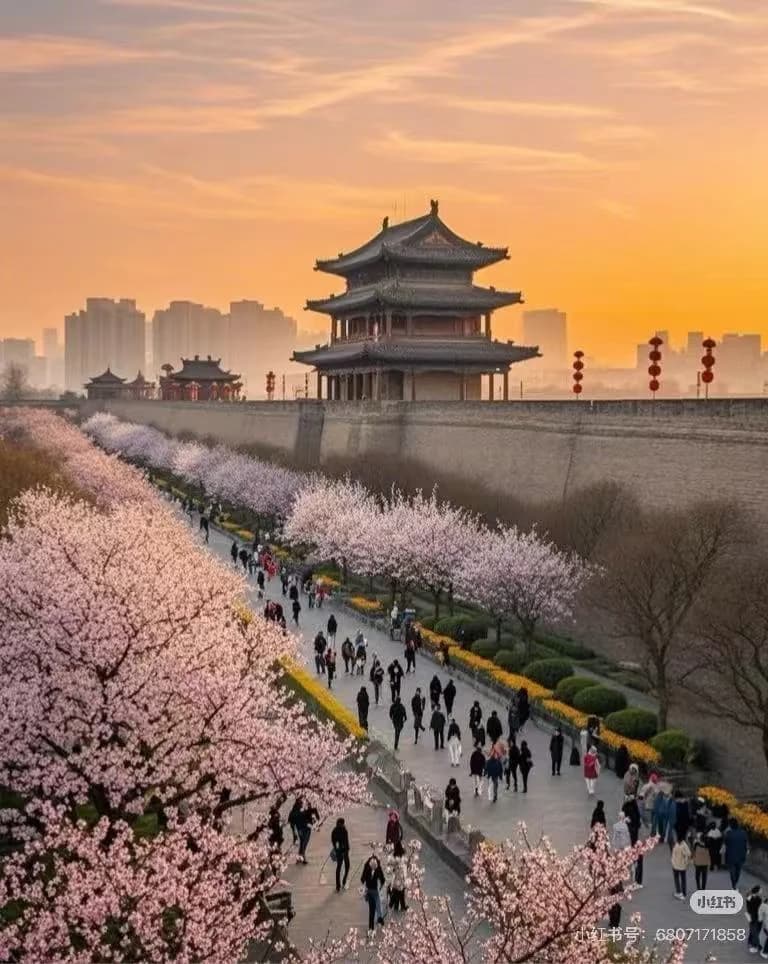
From late March to mid‑April, cherry trees inside Qinglong Temple bloom against grey brick walls and Tang‑style architecture. With the Giant Wild Goose Pagoda area nearby, this whole part of the city feels like Xi’an’s “spring postcard.” - Perfect conditions for walking or cycling the City Wall
April is the sweet spot for the 13.7 km City Wall loop—warm enough to be pleasant, not so hot or windy that you regret being on centuries‑old bricks with little shade. - Terracotta Warriors without the summer heat
The pits in Lintong can feel airless in summer. In spring, temperatures are easier to handle, so you can actually focus on the figures and displays instead of just looking for a place to cool off. - Muslim Quarter nights that feel “just right”
In the evening, you can sit outside with skewers, roujiamo, and biangbiang noodles without shivering in your jacket or sweating through your shirt.
Trade-offs to accept:
- Qingming and Labor Day are very crowded
- Qingming Festival usually falls around April 4–6
- Labor Day (May 1–5) is a peak domestic travel period
Expect more people and higher prices at the Terracotta Warriors, City Wall, Qinglong Temple, and the Giant Wild Goose Pagoda area.
- The odd dusty or hazy day
In March and early April, you may get one or two days where the sky looks yellowish and visibility is lower. It’s not constant, but it’s something to watch in the forecast and plan around. - Blossoms only last a couple of weeks
If cherry blossoms at Qinglong Temple are a key reason for your trip, you’ll need to check that year’s bloom forecast and be ready to aim carefully.
Who spring is good for:
- Travelers who want to tick off Terracotta Warriors + City Wall (walking or cycling) + Muslim Quarter night food + a bit of blossom in one trip
- First-time visitors to China who want weather that “just works” without much fuss
- People who are happy to plan around holidays and blossom timing
Key tips:
- If you can, aim for April 1–25 and avoid Qingming and Labor Day.
- If you have strong pollen or poplar fluff allergies, bring a mask and any medication you rely on.
- If there’s a dust storm warning, swap your City Wall and blossom day for a museum or indoor day and move outdoor plans to a clearer day.
Summer (June–August): Air‑Conditioned Days, Night‑Time Walls and Street Food
Weather overview:
- Daytime temperatures often top 30°C; strong sun, hot pavements
- Evenings cool down noticeably, but it’s still a warm season
Why summer is worth it:
- City Wall and moat at night
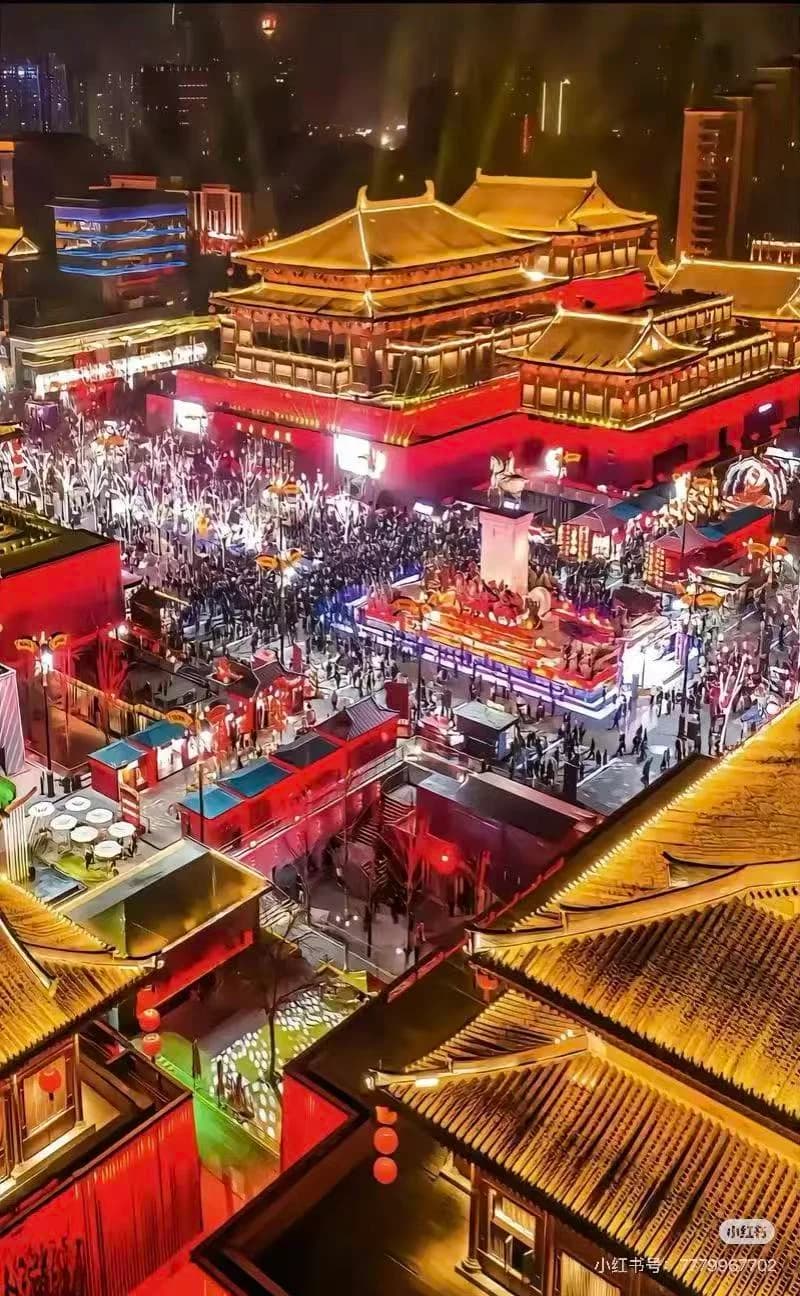
During the day the City Wall can feel like a giant hot plate. After dark, the towers light up, the moat path fills with people walking, and there’s usually a bit of breeze from the water. This is when the Wall feels inviting rather than punishing. - Giant Wild Goose Pagoda North Square + Great Tang All Day Mall (Da Tang Bu Ye Cheng)
On summer nights, the area around the pagoda and the Tang‑style pedestrian street becomes Xi’an’s outdoor living room: fountains, lights, performers, people strolling with drinks and snacks.
For many first-time visitors, this is where “daytime history” and “modern China at night” come together. - Night markets feel like proper summer
In the Muslim Quarter, the mix of grilling meat, ice‑cold drinks, sour plum juice, and crowds under neon and lanterns feels particularly “summer in China.” It’s lively, a bit noisy, and very memorable.
Trade-offs to accept:
- Midday heat and strong sun
Walking long distances around noon on top of the Wall or in open areas is a recipe for sunburn and heat exhaustion. - Afternoon thunderstorms or heavy showers
Short, intense downpours or thunderstorms can roll through with little warning. You’ll need a bit of flexibility. - Summer holidays mean extra crowds
July and August are school holidays in China. Expect more domestic visitors at headline sights and tighter booking conditions for popular museums.
Who summer is good for:
- Travelers who must visit China in summer (family schedules, school holidays, etc.)
- Night owls who care more about evenings on the Wall, night markets, and city life than about long daytime walks
- People who are happy to treat midday as “indoors only” and schedule around the heat
Key tips:
- Put your key outdoor activities in the 7–10 am and after 5 pm windows. Let museums, malls, cafés, and hotel naps own the middle of the day.
- Try to reserve the Shaanxi History Museum in advance. If you can’t get a slot, treat it as a bonus rather than a must‑do and go instead to the Tang West Market Museum, Beilin (Stele Forest), or simply lean into air‑conditioned cafés and malls.
- Pack sunscreen, a hat, a small umbrella (for sun and showers), and more water than you think you’ll need. Fighting the sun isn’t a travel achievement; it just makes you tired.
Autumn (September–November): Dry Air, Clear Skies, and the Easiest Planning
Weather overview:
- September: Still warm, with a bit of lingering summer
- October: Around 20°C; very comfortable days
- November: 10–15°C; cooler mornings and evenings but fine for walking
Why autumn is worth it:
- The best season for daytime on the City Wall
In autumn, temperatures and light both work in your favor. You can climb up at South Gate and walk for a long time without looking for shade or shelter from the wind. - Old streets that reward slow walking
Areas like Shuyuanmen, the Drum and Bell Towers, and the streets around the Muslim Quarter feel better in autumn. You can stand still, watch, and take photos without thinking “I need to get out of the sun.” - Dry air and good visibility
For photographers, autumn usually means bluer skies and sharper lines. The contrast between old rooftops and modern towers is easier to see—and capture—without haze.
Trade-offs to accept:
- Golden Week (Oct 1–7) is extremely busy
The Terracotta Warriors, City Wall, Muslim Quarter, and the Giant Wild Goose Pagoda area all feel the impact of China’s biggest travel week. Prices and crowds both spike. - Autumn color is subtle, not dramatic
Xi’an is not a “sea of red maples at your doorstep” kind of city. Expect a mix of historical architecture and patches of color rather than a single, overwhelming foliage scene.
Who autumn is good for:
- First-time visitors who want the least fussy weather option
- Travelers who like to walk the city and spend most days outside without thinking too hard about timing
- People who enjoy a low‑drama, “everyday” kind of fall color rather than a postcard‑perfect red‑leaf destination
Key tips:
- Aim for mid‑October to mid‑November and avoid Golden Week if at all possible.
- Pack in layers: T‑shirts or light long sleeves for daytime, a light jacket or knit for evenings.
- If you really want a stronger fall image, leave half a day for the ginkgo at Guguanyin Temple (Ancient Guanyin Temple) when it turns yellow, or for parks like Xingqinggong or Qujiang Pool under autumn light.
Winter (December–February): Quieter Streets, Friendly Prices, and Bowls of Hot Soup
Weather overview:
- Daytime temperatures roughly 0–10°C; colder mornings and nights
- Light snow is possible but heavy, long‑lasting snow is rare
Why winter is worth it:
- Quieter City Wall and Terracotta Warriors
In winter, you can often find long stretches of the Wall almost to yourself and more space in front of the Terracotta Warriors displays. It’s easier to stand and look without being pushed by big tour groups. - A very clear “winter memory” built around food
In the Muslim Quarter and in small local restaurants, steam from lamb soup, noodles, dumplings, and spicy broths hits you as soon as you step inside from the cold. For many visitors, that moment—cold fingers, fogged windows, a hot bowl in front of you—is what winter Xi’an feels like. - More forgiving prices
Outside of Chinese New Year and a few busy dates, flights and hotels often sit closer to off‑season levels.
Trade-offs to accept:
- Chill and wind, especially in open areas
Long stretches on the Wall or by the moat can feel sharp if you’re underdressed. You’ll need a real plan for staying warm. - Shorter days
If you love sleeping in, you’ll have to nudge your schedule earlier so the most “visual” parts of the day still happen in daylight. - Snow is a bonus, not a promise
You might see light snow dusting the Wall and roofs, or you might see none at all. It isn’t reliable enough to build your whole itinerary around.
Who winter is good for:
- Travelers who can handle cold reasonably well and want fewer people at major sights
- Budget‑minded visitors who are happy with a “cold outside, warm inside” rhythm
- People who’ve already seen the more polished, peak‑season side of China and now want a quieter version of a historic city
Key tips:
- Put outdoor‑heavy activities like the City Wall and the Terracotta Warriors between 11:00 and 15:00, when the sun has warmed things up a little.
- Pack seriously warm gear: a proper winter coat, warm trousers, hat, gloves, scarf, and shoes with grip that you can walk in all day.
- Give yourself permission to adjust plans on the day—if it feels too cold, spend a bit longer indoors and reshuffle.
Month‑by‑Month Overview
| Month | Weather Feel | Crowds | Typical Prices | Overall Recommendation |
|---|---|---|---|---|
| Jan | 🥶 Cold, some clear days | 👥 Low (except pre‑CNY) | 💰 Low–medium | ⭐⭐⭐ (great for budgets) |
| Feb | 🥶 Cold | 👥 Medium (CNY period busy) | 💰 Medium–high (holiday pricing) | ⭐⭐ (mainly if you want CNY) |
| Mar | ❄️ Late winter turning to spring; occasional dust | 👥 Medium | 💰 Medium | ⭐⭐ |
| Apr | 🌤️ Most comfortable; blossom season | 👥 Medium–high (around Qingming) | 💰 Medium–high (holiday uplift) | ⭐⭐⭐⭐ |
| May | 🌤️ Warm; hot at midday | 👥 High (Labor Day) | 💰 High (Labor Day) | ⭐⭐⭐ |
| Jun | 🌤️–🌧️ Getting hot | 👥 Medium | 💰 Medium | ⭐⭐ (works if you time your day right) |
| Jul | 🔥 Hot | 👥 High (school holidays) | 💰 Medium | ⭐⭐ |
| Aug | 🔥 Hot | 👥 High (school holidays) | 💰 Medium | ⭐⭐ |
| Sep | 🌤️ Warm | 👥 Medium | 💰 Medium | ⭐⭐⭐ |
| Oct | 🌤️ Very pleasant | 👥 High (Golden Week) | 💰 High (Golden Week) | ⭐⭐⭐⭐⭐ (after Oct 7) |
| Nov | 🌤️ Dry, cool | 👥 Medium–low | 💰 Medium | ⭐⭐⭐⭐ |
| Dec | 🥶 Cold | 👥 Low | 💰 Low–medium | ⭐⭐⭐ |
Holidays and Peak Periods to Watch
Periods better avoided (unless you have a specific reason)
- Qingming (around April 4–6)
Local tomb‑sweeping plus short‑break travel means more people on the road and on public transport. - Labor Day (May 1–5)
Terracotta Warriors, the City Wall, the Muslim Quarter, and the Giant Wild Goose Pagoda area all get extremely busy; hotel prices jump. - Golden Week (Oct 1–7)
China’s biggest holiday week. Xi’an is busy in the same way as other major destinations. - Chinese New Year (dates vary, usually Jan–Feb)
Some family‑run restaurants close, main sights are open but travel costs are often higher.
Times you can consider—with the right expectations
- Christmas–New Year (late Dec–early Jan)
Xi’an isn’t a traditional “Christmas city,” but malls and some streets have decorations. Crowds are there but much lighter than in summer. - Local weekends
Even outside big holidays, weekends are noticeably busier at the Terracotta Warriors, City Wall, Great Tang All Day Mall, and the Muslim Quarter than weekdays.
Choosing by Travel Style
If this is your first trip to China and you want the classics
- Best picks:
- April 1–25 (avoiding Qingming)
- After Golden Week through mid‑November (avoiding Oct 1–7)
- Why: You can comfortably fit Terracotta Warriors + City Wall + Muslim Quarter + the Giant Wild Goose Pagoda area into three or four days without constant weather stress.
If you care most about city life and street photography
- Best picks: October–November
- Why: Good light, good air, and temperatures that make it easy to linger on the Wall, in old streets, and around the Muslim Quarter without watching the clock.
If budget comes first and you can handle some heat or cold
- Best picks:
- Late November–early March (excluding Chinese New Year and big holidays)
- Some weekdays in July–August (if you accept hot days)
- Strategy: Use cheaper flights and hotels plus a “outdoor morning/evening + indoor midday” rhythm to keep the weather from becoming a real problem.
If you really hate heat
- Avoid: Daytimes in July–August as much as possible.
- Adjustment: Even if you can only travel in summer, you can still keep Xi’an to 2–3 nights and let museums, cafés, and naps own the hottest hours.
Practical Booking and Packing Tips
When to book accommodation
- Major holidays (Qingming, Labor Day, Golden Week, Chinese New Year):
Aim to book 2–3 months in advance if you want specific areas or hotels. - Spring and autumn weekdays:
2–4 weeks ahead is usually enough; adjust based on your international flights. - Winter and off‑peak non‑holiday periods:
1–2 weeks is often fine, especially if you’re flexible.
Packing logic by season
- Spring (Mar–May):
- Layer up: a light jacket plus short/long sleeves you can add or remove
- Bring at least one windproof or water‑resistant layer for rain and gusty days
- Summer (Jun–Aug):
- Breathable clothing plus a thin layer for aggressive indoor air‑con
- Hat, sunscreen, and a light umbrella
- Autumn (Sep–Nov):
- T‑shirts or light long sleeves by day; light jacket or knit at night
- Comfortable shoes that can handle cobblestones and the Wall all day
- Winter (Dec–Feb):
- A warm outer layer plus sweaters or hoodies you can stack
- Warm trousers, thick socks, and grippy shoes you can walk in for hours
- Hat, scarf, and gloves depending on how much you feel the cold
Final Thoughts: Honest Suggestions for Different Travelers
-
If Xi’an is part of your very first China itinerary:
Slot it into April 1–25 or mid‑Oct to mid‑Nov. Those few days will be the easiest to plan—good weather, classic sights, and a strong “historic city” feel on the Wall and in the Muslim Quarter. -
If you’re watching your budget but still want a serious historic stop:
Putting Xi’an in late autumn through early spring (outside major holidays) usually pays off in cheaper flights and hotels and calmer sights, as long as you’re ready for the cold. -
If you can only come in summer:
Accept that daytime belongs to air‑conditioning and museums, evenings belong to the Wall and night markets. With that mindset, Xi’an is still very much worth a few nights. -
If you’ve already seen the polished, peak‑season side of China and want something quieter:
Winter Xi’an—plus bowls of hot soup and noodles—is a slower, more everyday version of the city that many people end up remembering fondly.
As long as you glance at the holiday calendar and weather forecast and rank your own priorities—weather, crowds, budget, and type of experience—you’ll find a Xi’an season that genuinely fits the way you like to travel.
Related Guides: