Last updated: March 2026. Verify before booking.
[Opening Paragraph]
[Core Content Sections]
Is This Right For You
- ✅ Recommended for: People who want to make "cross-border" part of their journey; people who are willing to do their homework before traveling and are willing to prepare documents according to the process.
- ✅ Ideal for: People who prefer trains to planes; who want a "slower but more complete" way to travel.
- ❌ Not recommended: People who have very tight travel time; cross-border trains have more uncontrollable factors than domestic high-speed trains.
- ❌ Not suitable: People who are unwilling to deal with visa/port procedures; this type is more suitable for direct flights + local short-distance transportation.
Route Overview
| Days | City | Daily Topic | Transportation |
|---|---|---|---|
| Day 1 | Kunming | Supplies before departure: Prepare documents/payment/network at once | — |
| Day 2 | Kunming → Luang Prabang | Transit day: Make the process "less error-prone" | Train (subject to the schedule of the day) |
| Day 3 | Luang Prabang | Old Town and Temples: It only looks like this when you slow down | City |
| Day 4 | Luang Prabang → Vientiane | Switching from "ancient city" to "capital" | Train/Transportation |
| Day 5 | Vientiane | Ending on the Mekong River + return/continue trip | City |
Day 1: Kunming - Before crossing the border, do three things first
morning / noon
- Check visa/entry policies and port requirements (the most important step).
- Passport validity, entry documents, and insurance (if required) are prepared in advance.
afternoon
- Payment and App: Make sure payment and booking can be completed on your mobile phone.
- Network: Ensure that you can continue to access the Internet after crossing the border (international roaming/eSIM/local card plan).
night
- Keep flexibility on the "port time" the next day: don't be stuck catching the train.
Day 2: Kunming → Luang Prabang - Treat this day as a "process day", not a "scenic spot day" (high-speed rail city change day)
morning
- Arrive early. Cross-border trains have more variables and arriving early can reduce errors.
afternoon
- Follow the on-site instructions at the port link (exit/entry); save screenshots of the hotel address and destination for taxi/communication upon landing.
night
- There is only one thing to do when arriving in Luang Prabang: eat + rest. Don’t shoehorn attractions.
Day 3: Luang Prabang - Slow down, it becomes like this place
morning
- Pick a core temple/museum spot; you don’t need to complete them all.
afternoon
- Old town walk + cafe/riverside; incorporate “heat” and “rhythm” into the plan.
night
- You can buy it at the night market, but don’t buy it so much that you can’t carry it – you have to change cities the next day.
Day 4: Luang Prabang → Vientiane - from the ancient city to the capital (high-speed rail city change day)
morning
- Take a bus to Vientiane. Check in first after arriving at the station, don't make arrangements to travel to the outskirts immediately.
afternoon
- City walk + museum/temple choice; the main purpose is to "understand the rhythm of everything".
night
- A day spent watching the Mekong River is enough; don’t schedule too many nights.
Day 5: Vientiane - ending and return day
morning
- Focus on shopping/supplies in the morning and leave the afternoon for the return trip.
Afternoon / Evening
- Return or continue your Southeast Asia itinerary.
High-speed rail connection (implemented on a daily basis)
- Day 2 (Kunming → Luang Prabang): Consider the port time as the main part of the itinerary, reserve at least 2-3 hours for process flexibility, and don’t get stuck.
- Day 4 (Luang Prabang → Vientiane): Prioritize arriving before noon and do a light city walk in the afternoon to avoid being crowded with attractions on a cross-city day.
- Key points for the cross-border section: Screenshots of tickets, passports, and hotel addresses must be saved offline the night before; screenshots are necessary when the network is temporarily unstable.
- If you choose the tourist train product: Confirm whether the "on/off station" connection is included in the package to avoid a temporary fare increase on the last section.
Getting There and Getting Around
- Domestic segment booking/entry: refer to China's High-Speed Rail.
- Payment: Please handle the payment in China before crossing the border (entry, station consumption, taxi), see How to Pay in China.
- Network: After cross-border, the network is urgently needed, see Staying Connected in China.
Practical Information
| Projects | Suggestions |
|---|---|
| Recommended days | From 5 days for free travel; 4–7 days for tourist trains |
| Difficulty | Medium – High (visa/port/cross-border variables) |
| Budget | Traveling independently is more controllable; tourist train prices are usually higher |
| Language | It is recommended to save bilingual screenshots of key addresses and itinerary information |
Book These in Advance
- Visa/Immigration Materials: This is not a matter of “we will talk about it when we arrive”, it must be prepared in advance.
- Cross-border tickets/products: Peak season is more stressful, so book in advance.
- Accommodation: Luang Prabang has a better location; staying within walking distance of the old town will save you trouble.
Tips and Tricks
- Consider cross-border travel as your main itinerary: Don’t arrange attractions on transit days, the experience will be more stable.
- Screening is more useful than typing: Take screenshots of hotel address, station name, and port name.
- Less luggage: Moving across borders is more expensive and easier with less luggage.
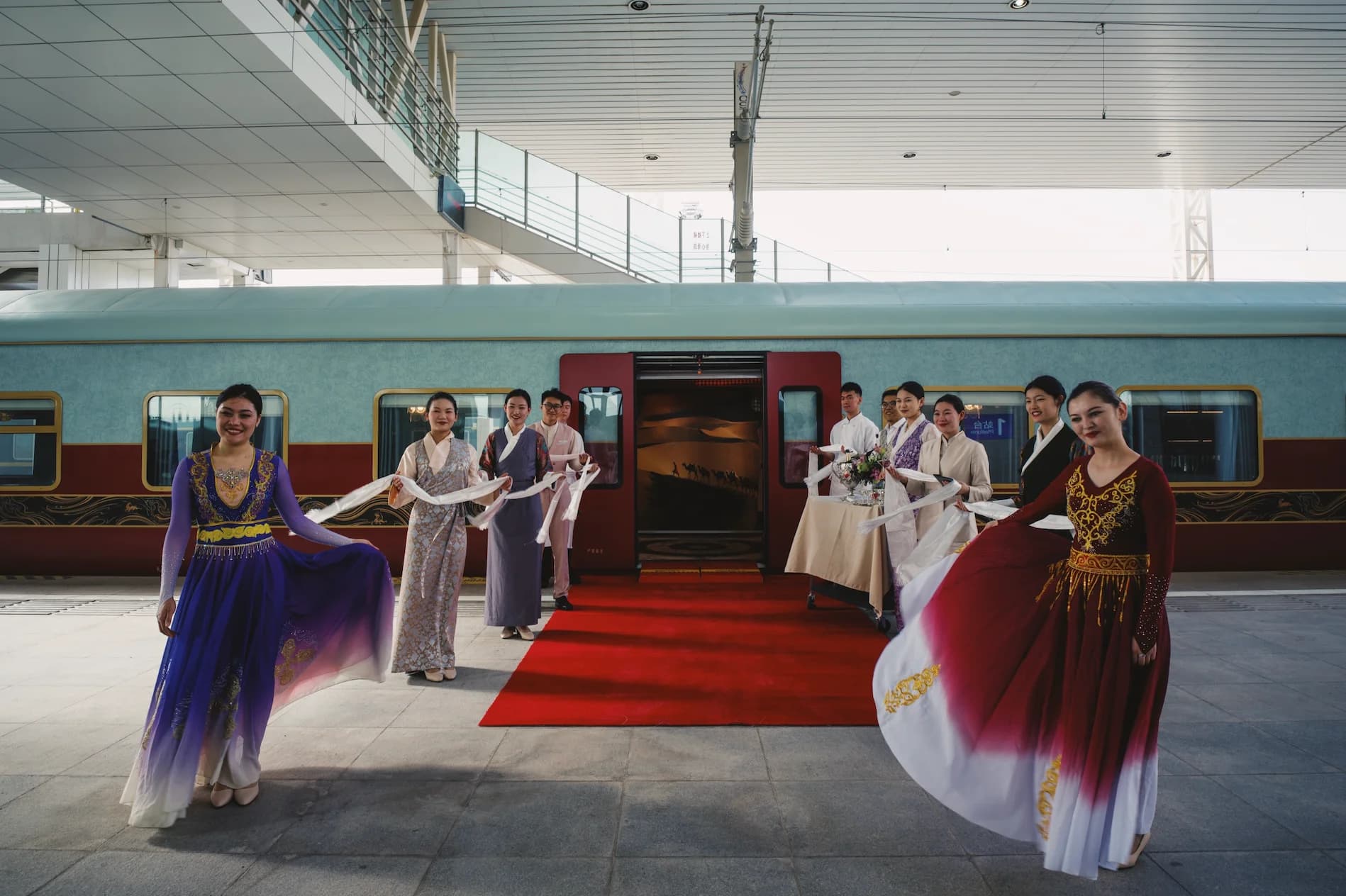
- Travel train = mobile hotel: It is suitable for people who "prioritize peace of mind", not suitable for people who "prioritize freedom".
What to Cut If You're Short on Time
- Only 3 days: Cross-border train is not recommended; direct flight + single city is more suitable.
- Only 4–5 days: Choose between Luang Prabang and Vientiane, with Luang Prabang preferred.
Before You Go Checklist
- □ Visa/entry document verification (official source)
- □ Payment and wallet settings——How to Pay in China
- □ Network plan——Staying Connected in China
- □ Screenshots of important information: hotel address, port name, ticket information
FAQ
**Q1: Is cross-border train more convenient than flying? ** uncertain. It's more "travel-like," but has more variables; less hassle usually means a stronger plane.
**Q2: Is the tourist train worth it? ** If "worry-free + all-inclusive + sense of ceremony" is the priority, it is very economical; if you want to eat and walk freely, it will appear expensive and arranged.
[Closing Paragraph]
The romance of cross-border trains comes from "treating the border as part of the journey" rather than teleporting from point A to point B. But to make it really fun, the prerequisite is to prepare your documents, payment, and network well: if you do these three things right, the rest will be the scenery, food, and the rhythm of the city.